
Planning Corporate Video Shoots in Paris: The Ultimate Guide for US Companies
- Feb 21
- 14 min read

Rome Video ProductionIf you're a US-based marketing director planning a corporate video shoot in Paris, you're likely facing a unique challenge: how do you coordinate professional video production in a foreign city where you don't have local contacts, may not speak the language, and aren't familiar with permitting requirements?
As a cinematographer with over 25 years of international experience who regularly works with US companies on European shoots, I've guided dozens of American corporations through successful Paris productions. This guide covers everything you need to know to plan a smooth, professional corporate video shoot in the City of Light.
Why US Companies Choose Paris for Corporate Video Production
Paris isn't just a beautiful backdrop—it's a strategic choice for many corporate videos:
For Technology Companies: Paris is home to Station F (world's largest startup campus) and hosts major tech events like VivaTech. Filming at these locations signals innovation and European market presence.
For Pharmaceutical and Healthcare: With major facilities from Sanofi, L'Oréal, and others, Paris offers authentic backdrops for life sciences companies showcasing their European operations.
For Financial Services: La Défense business district provides modern corporate architecture that rivals New York or London, perfect for financial services videos.
For Luxury and Fashion Brands: The association with French elegance and sophistication elevates brand positioning in corporate communications.
For International Expansion Announcements: Nothing says "we're serious about Europe" like filming your expansion announcement with the Eiffel Tower in the background.
Understanding the Timeline: When to Start Planning
12 Weeks Before (Ideal)
If you're planning to film at restricted locations like inside corporate offices, government buildings, or during major events, start planning three months ahead. This gives time for:
Location scouting and permits
Crew and equipment booking
Travel arrangements
Contingency planning
6-8 Weeks Before (Workable)
For straightforward shoots at accessible locations (parks, public squares, your own office), two months is typically sufficient. You'll still get good crew availability and competitive rates.
2-4 Weeks Before (Challenging but Possible)
Last-minute shoots are feasible for experienced production teams, but expect:
Limited location choices
Higher crew rates (rush booking)
Fewer equipment rental options
More stress
My recommendation: Start planning 8-10 weeks out for the best balance of flexibility and reasonable costs.
Budgeting Your Paris Corporate Video Shoot
US companies are often surprised by European production costs—they're generally comparable to major US cities, but the structure differs.
Typical Budget Ranges (Full Day Shoot)
Basic Corporate Interview or Testimonial:
Budget: €3,000-5,000
Includes: Single camera, cinematographer, sound recordist, basic lighting
Best for: Executive interviews, employee testimonials, simple product demonstrations
Mid-Range Corporate Content:
Budget: €5,000-10,000
Includes: Multi-camera setup, full crew (cinematographer, AC, sound, gaffer), professional lighting and grip
Best for: Conference coverage, facility tours, brand videos
Premium Production:
Budget: €10,000-20,000+
Includes: Cinema cameras (RED, ARRI), specialized equipment (drones, jibs, sliders), larger crew, multiple shoot days
Best for: High-end brand films, commercial spots, annual reports
What's Included vs. Extra
Typically Included:
Cinematographer and essential crew
Camera and basic equipment
On-site direction and coordination
File delivery (hard drive or cloud transfer)
Usually Extra:
Location permits (€100-1,000+ depending on location)
Talent (actors, presenters) if needed
Hair/makeup artists
Post-production (editing, color grading, sound mix)
Music licensing
Travel costs if crew comes from outside Paris
Equipment rentals beyond basic kit
Pro tip: Request an all-inclusive quote that breaks out each element. This prevents surprise costs and helps with budget approval back home.

Navigating Paris Filming Permits
This is where many US companies hit their first obstacle. Unlike some US cities where you can "run and gun," Paris has specific permitting requirements.
When You Need a Permit
YES, you need a permit for:
Filming on public streets with professional equipment (even just a tripod)
Any shoot in Paris parks (Tuileries, Luxembourg Gardens, etc.)
Filming near major monuments (Eiffel Tower, Arc de Triomphe, Louvre exterior)
Any shoot using lighting equipment on public property
Drone filming (separate aviation authority approval required)
Filming in metro stations or on public transportation
NO permit needed for:
Handheld filming as a tourist (but you can't be obviously commercial)
Filming inside private property you have permission to use
Filming inside your own office or event space
How to Obtain Permits
Option 1: Hire a Local Fixer/Production Coordinator
Cost: €500-1,500/day
They handle: Permit applications, location liaison, problem-solving
Best for: Complex shoots or if you're unfamiliar with French bureaucracy
Option 2: Work with a Full-Service Production Company
They handle all permitting as part of service
More expensive overall but comprehensive
Option 3: Your Cinematographer Handles It
Experienced Paris videographers can often secure standard permits
Cost-effective for straightforward locations
Ask if this is included in their rate
Processing Time:
Standard permits: 2-3 weeks
Rush permits: 1 week (higher fees)
Simple location permits: Sometimes same-day for experienced crews with established relationships
My recommendation: If you're filming at just one or two standard locations (like a public square for B-roll), hire a cinematographer who regularly works in Paris and can handle permits. For complex shoots, add a dedicated fixer.
Essential Locations for Corporate Video in Paris
Modern Corporate Backdrops
La Défense Business District:
Why: Ultra-modern architecture, glass towers, international business atmosphere
Best for: Financial services, tech companies, corporate headquarters footage
Permits: Required for professional shoots
Best time: Early morning (fewer crowds) or blue hour (dramatic lighting)
Station F (Startup Campus):
Why: World's largest startup incubator, signals innovation
Best for: Tech companies, innovation-focused content
Access: Requires advance permission, easier if you have a connection
Parc de la Villette:
Why: Modern architecture, science museum backdrop, Canal de l'Ourcq
Best for: Education, science, technology companies
Permits: Required, but relatively easy to obtain
Classic Parisian Backdrops
Trocadéro (Eiffel Tower Views):
Why: Iconic Paris establishing shot
Best for: Brand elevation, international presence messaging
Permits: Required
Timing: Sunrise or after business hours to avoid crowds
Seine River Banks:
Why: Beautiful, timeless, quintessentially Paris
Best for: Walk-and-talk interviews, transition shots
Permits: Required for tripod/lighting
Pro tip: Île Saint-Louis and Île de la Cité offer less crowded options
Covered Passages (Galerie Vivienne, Passage des Panoramas):
Why: Historic, elegant, weather-protected
Best for: Luxury brands, fashion, retail
Permits: Check with individual passage management
Hidden Gems (Less Touristy)
Promenade Plantée (Elevated Park):
Why: Modern, green, architectural interest
Best for: Healthcare, wellness, lifestyle brands
Bercy Village:
Why: Charming restored warehouses, pedestrian-friendly
Best for: Food & beverage, retail, hospitality brands
Parc de Belleville:
Why: Stunning city views, local neighborhood feel
Best for: Authentic, non-touristy Paris aesthetic
Language and Communication
You don't need to speak French to film in Paris, but it helps to understand the landscape.
Working Language Options
English-Speaking Crew: Most professional Paris cinematographers and crew speak English—it's standard in the international production industry. When hiring, confirm:
Cinematographer speaks fluent English
Key crew members (sound, AC) have working English
Fixer/coordinator is bilingual (critical for permits and location coordination)
Why Multilingual Matters: My 25+ years working internationally means I'm fluent in English, French, and German (plus Spanish, Italian, Portuguese, and Norwegian). This isn't just convenient—it's strategic:
Direct communication with French location managers and permit offices
No "lost in translation" moments during shoots
Ability to interview French employees if needed
Cultural understanding that prevents faux pas
Client Communication: Plan for regular check-ins in your timezone:
Pre-production: Weekly video calls
Week of shoot: Daily email updates
Shoot day: WhatsApp or text for real-time updates
Post-shoot: File delivery coordination
Pro tip: Even if your crew speaks English, having a few French phrases goes a long way with location managers. "Bonjour," "merci," and "s'il vous plaît" show respect and smooth permissions.
Equipment and Technical Considerations
Camera and Lighting
What's Available in Paris: Paris has excellent professional equipment rental houses with gear comparable to any major US city:
Cinema cameras: RED, ARRI, Sony Venice
Professional video: Sony FX, Canon C-series, Blackmagic
Lighting: ARRI, Aputure, Kino Flo
Grip: Full selection of tripods, sliders, jibs, dollies
Power and Voltage: France uses 230V, 50Hz power (vs. 120V, 60Hz in US). Implications:
Most professional gear handles dual voltage automatically
Check your own equipment if bringing anything from US
Adapters needed for US plugs (Type C/E European plugs in France)
Format and Delivery: Confirm with your cinematographer:
Recording format (ProRes, RAW, etc.)
Frame rate (24fps for cinematic, 30fps for US broadcast compatibility)
Delivery format and method (hard drive, cloud upload)
File naming and organization system
My setup: I shoot on RED Komodo 6K, which gives you:
Cinema-quality imagery that matches your US corporate brand standards
Flexibility in post-production (color grading, reframing)
Global compatibility (works worldwide, including your US post house)
Weather and Seasonal Considerations
Paris weather can make or break an outdoor shoot. Here's what to expect:
Best Shooting Seasons
Spring (April-May):
Pros: Mild weather, blooming flowers, good light quality
Cons: Occasional rain, tourist season beginning
Recommendation: Excellent for outdoor shoots
Summer (June-August):
Pros: Long days (sunset at 10pm in June), warm weather
Cons: Peak tourist crowds, some Parisians on vacation in August
Recommendation: Early mornings essential to avoid crowds
Fall (September-October):
Pros: Beautiful light, fewer tourists after September
Cons: Rain becomes more frequent
Recommendation: My favorite season for filming
Winter (November-March):
Pros: Fewer tourists, dramatic moody light
Cons: Short days (sunset at 5pm), cold, rain/occasional snow
Recommendation: Good for indoor shoots, challenging for outdoor
Weather Backup Plans
Always have:
Rain date built into schedule (even in summer)
Indoor backup location identified
Flexibility in shot list (can rearrange based on weather)
Pro tip: French weather forecasts are quite accurate 3-5 days out. Plan final shot lists once you have a solid forecast.
Crew Structure: What You Actually Need
US companies often over-crew or under-crew. Here's the right balance:
Minimal Crew (€2,500-4,000)
For: Simple interviews, testimonials Team:
Cinematographer/Director (me)
Sound recordist
Works well for: Single-location, controlled environment, 1-3 interview subjects
Standard Crew (€4,000-7,000)
For: Most corporate shoots Team:
Cinematographer/Director
1st AC (camera assistant/focus puller)
Sound recordist
Gaffer (lighting technician)
Works well for: Multi-location, b-roll, interviews, basic production value
Full Crew (€7,000-15,000+)
For: High-end productions Team:
Director
Cinematographer/DP
1st AC
Sound recordist
Gaffer
Key grip
Production assistant/runner
Optional: Makeup artist, stylist, fixer
Works well for: Multiple shoot days, talent on camera, complex lighting, moving shots
My recommendation: For most US corporate clients, the "standard crew" setup delivers professional results without unnecessary overhead.
Working with Your US Post-Production Team
One advantage of hiring an experienced international cinematographer: seamless handoff to your US editors.
File Delivery Options
Physical Hard Drive:
Ship via FedEx/DHL (2-3 days to US)
Safest for large file sizes (RED RAW files can be 500GB+)
Cost: €50-150 for shipping
Cloud Transfer:
Upload to Google Drive, Dropbox, Frame.io, or your preferred platform
Faster delivery (available same-day)
Requires good internet (Paris has excellent bandwidth)
Cost: Usually included, or €50-100 for large uploads
Hybrid:
Proxy files (smaller) uploaded immediately for editing to begin
Full resolution files shipped on hard drive
Best of both worlds
Technical Specs for Your Post Team
When briefing your cinematographer, provide:
Editing software your team uses (Premiere, Final Cut, Avid, DaVinci)
Codec preferences (ProRes 422 HQ is standard, but confirm)
Frame rate (23.976fps for film look, 29.97fps for broadcast)
File naming convention (if your company has standards)
Folder structure (scene/take organization)
Pro tip: Send your cinematographer an example of how you want files delivered based on a previous shoot. This ensures consistency across all your corporate content.
Cultural Considerations and Etiquette
Small cultural awareness goes a long way in French business culture.
Meeting and Communication
Greetings: Handshake is standard in business (though post-COVID, some prefer verbal greeting)
Formality: Address people as "Monsieur" or "Madame" until invited to use first names
Punctuality: Being 5-10 minutes late is more acceptable than in US business culture, but professional crews will be on time
Filming Etiquette
Always ask permission before filming people, even in public spaces
Lunch is sacred: Plan for proper lunch break (1 hour minimum). French crew won't work through lunch like US crews sometimes do.
Working hours: Standard is 9am-6pm. Overtime rates apply after 10 hours
Respect locations: French location managers expect you to leave spaces cleaner than you found them
Business Meals
If taking crew or clients to lunch/dinner:
Tipping: Service is included, but rounding up or adding 5-10% for excellent service is appreciated
Meal pacing: French meals are slower-paced than US business lunches
Wine at lunch: Not uncommon, but keep it professional (one glass)
Insurance and Legal Requirements
Production Insurance
What you need:
Public Liability Insurance: €2-5 million coverage (required for most location permits)
Equipment Insurance: Covers rented/owned gear
E&O Insurance: Errors and omissions (if applicable)
Who provides it:
Option 1: Your cinematographer/production company carries it (most common)
Option 2: Your US company's commercial policy may extend to European shoots
Option 3: Purchase short-term production insurance
Verification: Location managers will ask for "attestation d'assurance" (proof of insurance). Your crew should provide this.
Contracts and Rights
Important to clarify:
Usage rights: Where and how long can you use the footage?
Talent releases: If filming employees or public, who secures releases?
Music licensing: Who handles licensing for any music in final video?
Deliverables: Raw files, edited video, or both?
Pro tip: Most European cinematographers work on full buyout (you own all footage). Confirm this in your agreement.
Day-of-Shoot Logistics
Transportation
Getting Around Paris:
Metro/RER: Fast and efficient, but difficult with equipment
Taxi/Uber: Convenient, but Paris traffic can be severe
Production Van: Best for equipment-heavy shoots (can be included in package)
Parking:
Street parking is difficult and expensive
Loading zones require permits
Plan equipment load-in/load-out carefully
My approach: I typically use a combination of public transport for myself and arrange van rental when gear requires it. This keeps costs reasonable while ensuring efficiency.
On-Set Communication
Expect:
Morning briefing (confirming day's schedule and any changes)
Regular updates between shots
End-of-day wrap (confirming tomorrow's call time, location, needs)
Tools:
WhatsApp group for production team
Shared Google Drive for shot lists and schedules
Frame.io or similar for reviewing dailies (if client wants to see footage before post)
Pro tip: Given the time difference (6-9 hours behind US), plan key decisions the day before. I'll send you dailies/selects in Paris evening (your US morning) so you can review and provide feedback.
Common Challenges and How to Avoid Them
Challenge 1: Crowds at Tourist Locations
Solution:
Shoot early morning (before 8am) or late evening
Use longer lenses to compress background and minimize crowd visibility
Consider off-season months (November-March)
Have patience and plan extra time
Challenge 2: Last-Minute Permit Denials
Solution:
Apply early (3+ weeks)
Have backup locations identified
Work with experienced fixer who has relationships with permit offices
Some locations (parks, squares) are easier than others (metro, monuments)
Challenge 3: Language Barriers
Solution:
Hire bilingual crew (most Paris professionals speak English)
Use translator app for basic interactions
Brief crew thoroughly in English, but have French backup for location coordination
Challenge 4: Weather Disruptions
Solution:
Build rain date into schedule
Have indoor backup location scouted
Flexible shot list (prioritize essential shots first)
Monitor weather forecast closely 3-5 days out
Challenge 5: Time Zone Coordination
Solution:
Schedule daily check-ins at overlapping hours (Paris afternoon = US morning)
Use asynchronous communication (detailed emails, recorded video updates)
Empower your cinematographer to make on-set decisions
Review dailies workflow so you can approve shots without real-time communication
Post-Production Considerations
Editing Timeline
If your US editor is cutting the project:
File transfer: 1-2 days (cloud) or 3-5 days (hard drive shipping)
Editing: Depends on project complexity, but plan 2-4 weeks for typical corporate video
Revisions: Build in time for feedback loops across time zones
If editing in Paris/Europe:
Advantages: Direct communication with cinematographer, faster turnaround
Considerations: Ensure editor speaks English fluently, compatible software/systems
Music and Voice-Over
Music licensing:
Stock music: Artlist, Musicbed, Epidemic Sound (€200-500)
Custom composition: €1,000-5,000+
Rights: Confirm worldwide, perpetual use
Voice-over:
French voice talent: €300-800 for professional
US voice talent: Often clients prefer to handle this side
Recording: Can be done remotely or in Paris studio
Color Grading
Paris has beautiful natural light, but proper color grading elevates corporate video:
Basic color correction: Usually included in editing
Professional color grading: €500-2,000 depending on length
Look/feel: Confirm if you want natural, warm, cool, or cinematic grade
My process: I typically deliver LOG footage (flat, maximum flexibility) to your colorist, or can recommend a Paris-based colorist if you prefer to keep everything European time zone.
Cost Optimization Strategies
How to Get Maximum Value
Combine Shoot Days: If you need footage in multiple European cities, combine into one trip:
Film in Paris (2 days) + Rome (1 day) = more efficient than separate trips
Reduces travel costs, crew mobilization fees
Takes advantage of already being in Europe
Share Resources: If you have multiple departments needing Paris content:
Coordinate between marketing, HR, sales to shoot multiple projects
Share crew and production costs
More efficient use of location permits
Shoot More Than You Need: If you're already on location with crew:
Get extra b-roll for future projects
Capture additional interview questions beyond immediate needs
Build content library for ongoing use
Marginal cost is small compared to re-mobilizing later
Off-Peak Timing:
November-March: Lower crew rates, easier location access
August: Many French on vacation, so some price flexibility (but also reduced crew availability)
Avoid May-June (high season) if budget-conscious
My recommendation: A well-planned 2-3 day shoot in Paris will give you enough content for multiple videos throughout the year. Think strategically about all your content needs.
Why Experience Matters: Choosing the Right Cinematographer
When hiring for a Paris shoot, you're not just hiring a camera operator—you're hiring a production partner who can navigate French bureaucracy, handle unexpected challenges, and deliver professional results that match your US corporate standards.
What to Look for
International Experience:
Have they worked with US clients before?
Do they understand US corporate expectations?
Can they deliver files compatible with your US post-production workflow?
Language Capability:
Fluent English for client communication
French for permits, locations, crew coordination
Additional languages are bonus (German for German clients in Paris, etc.)
Technical Quality:
Cinema-grade equipment (RED, ARRI, Sony Venice)
Showreel that matches your brand's quality standards
References from previous US/international clients
Production Coordination:
Can they handle permitting?
Do they have crew network in Paris?
Will they coordinate all logistics or do you need separate fixer?
Communication Style:
Proactive updates
Problem-solving mentality
Flexible but professional
My background: Over 25 years of international production, I've worked with major US corporations including Pfizer, BrainCorp, and Donaldson on European shoots. I understand US corporate culture, speak 7 languages fluently (including English, French, and German), and deliver RED 6K quality that matches your brand standards. More importantly, I handle all aspects of production coordination so you have a single point of contact from pre-production through file delivery.
Sample Timeline: 2-Day Paris Corporate Shoot
Here's what a typical corporate shoot looks like:
Pre-Production (6-8 weeks before)
Week 1-2:
Initial consultation and creative brief
Location scouting (virtual or in-person)
Crew and equipment booking
Week 3-4:
Shot list and schedule finalization
Permit applications submitted
Travel arrangements confirmed
Week 5-6:
Permits approved
Equipment confirmed
Final logistics coordinated
Week 7-8:
Pre-production call (final details)
Weather monitoring begins
Contingency plans confirmed
Production (2 days)
Day 1 - Interview Day:
8:00am: Crew call, equipment load-in
9:00am: Setup at office location for executive interviews
10:00am: First interview (CEO/President)
11:30am: Second interview (European Director)
1:00pm: Lunch break
2:00pm: Third interview (local employees - customer stories)
4:00pm: B-roll in office (employees working, facility shots)
6:00pm: Wrap, equipment load-out
Day 2 - Location Day:
7:00am: Crew call (early for best light)
7:30am: Setup at Trocadéro (Eiffel Tower backdrop)
8:00am: Filming establishing shots, executive walk-and-talk
10:00am: Move to La Défense business district
11:00am: Filming modern corporate backdrop shots
12:30pm: Lunch
2:00pm: Seine River location for transition shots
4:00pm: Backup/creative shots at secondary location
6:00pm: Wrap
Post-Production (2-4 weeks)
Week 1:
File organization and backup
Delivery to your US editing team (via cloud or shipped drive)
Week 2-4:
Your editor cuts video
Feedback and revision process
Color grading and final delivery
Final Checklist: What to Bring to Your First Planning Call
When you're ready to start planning your Paris shoot, have this information ready:
Creative Brief:
What's the video's purpose? (recruitment, brand awareness, product launch, etc.)
Who's the target audience?
What's the key message?
Desired tone/feel? (corporate, inspiring, technical, elegant, etc.)
Example videos you like
Logistics:
Preferred shoot dates (with backup dates)
How many shoot days needed?
Locations in mind or open to suggestions?
Will you be on-site or remote?
Talent and Subjects:
Who will be on camera? (executives, employees, actors)
Will they be in Paris or traveling there?
Languages needed?
Deliverables:
Raw files only, or edited video?
If edited: length, versions needed, platform destinations
Timeline for final delivery
Budget:
What's your total budget range?
What's included? (production only, or production + post + travel?)
Any budget constraints to work around?
Conclusion: Making Your Paris Shoot a Success
Planning a corporate video shoot in Paris from the US might seem daunting, but with the right preparation and an experienced production partner, it's entirely manageable—and the results are worth it.
The key is starting early, being clear about your goals and constraints, and working with someone who understands both US corporate expectations and French production realities.
Paris offers unparalleled visual appeal and cultural cachet for corporate videos. Whether you're showcasing your European expansion, filming at a Paris conference, or simply want that French elegance to elevate your brand messaging, proper planning ensures your shoot runs smoothly and delivers exceptional results.
Ready to Plan Your Paris Corporate Video Shoot?
With over 25 years of international cinematography experience, I've helped dozens of US companies successfully produce corporate videos in Paris and across Europe. I handle everything from permits to crew coordination to final file delivery—giving you a single, English-speaking point of contact who understands US corporate standards.
Services include:
Pre-production planning and location scouting
All permits and legal requirements
Professional crew coordination (I speak 7 languages including English, French, and German)
RED 6K cinema camera production
Delivery compatible with your US post-production workflow
Contact me to discuss your Paris shoot:
Let's create something exceptional in Paris.
About the Author:
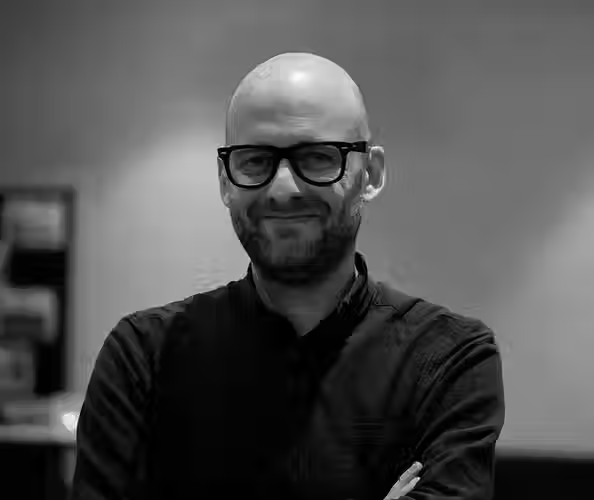
Theo Solnik is an award-winning cinematographer with 25+ years of international experience. Based in Europe but working globally, he specializes in corporate video production for US and international clients. His work includes projects for Pfizer, BrainCorp, Donaldson, Huawei, and Google. Fluent in 7 languages, Theo understands the unique challenges of international production and delivers cinema-quality results that match Fortune 500 brand standards.